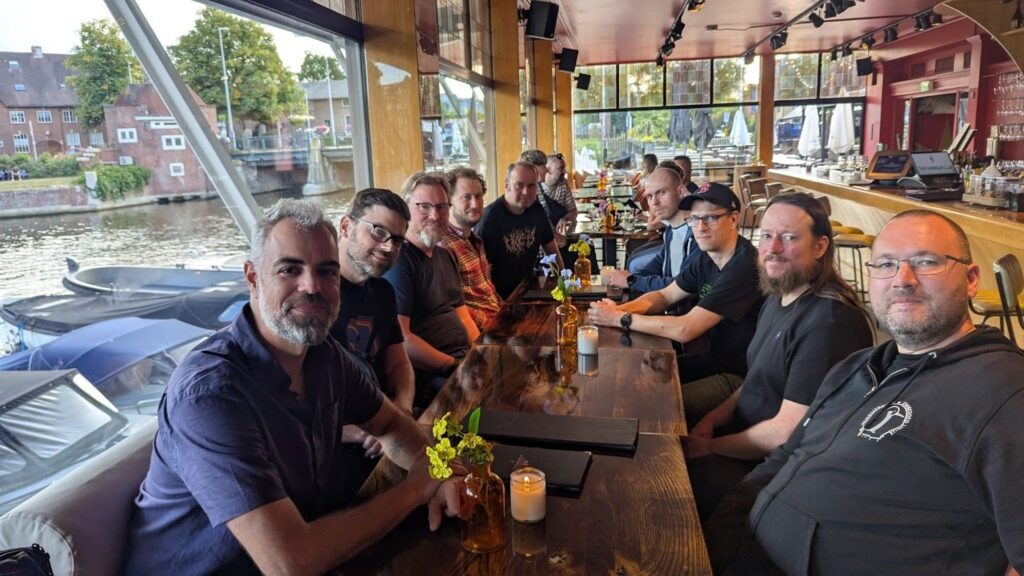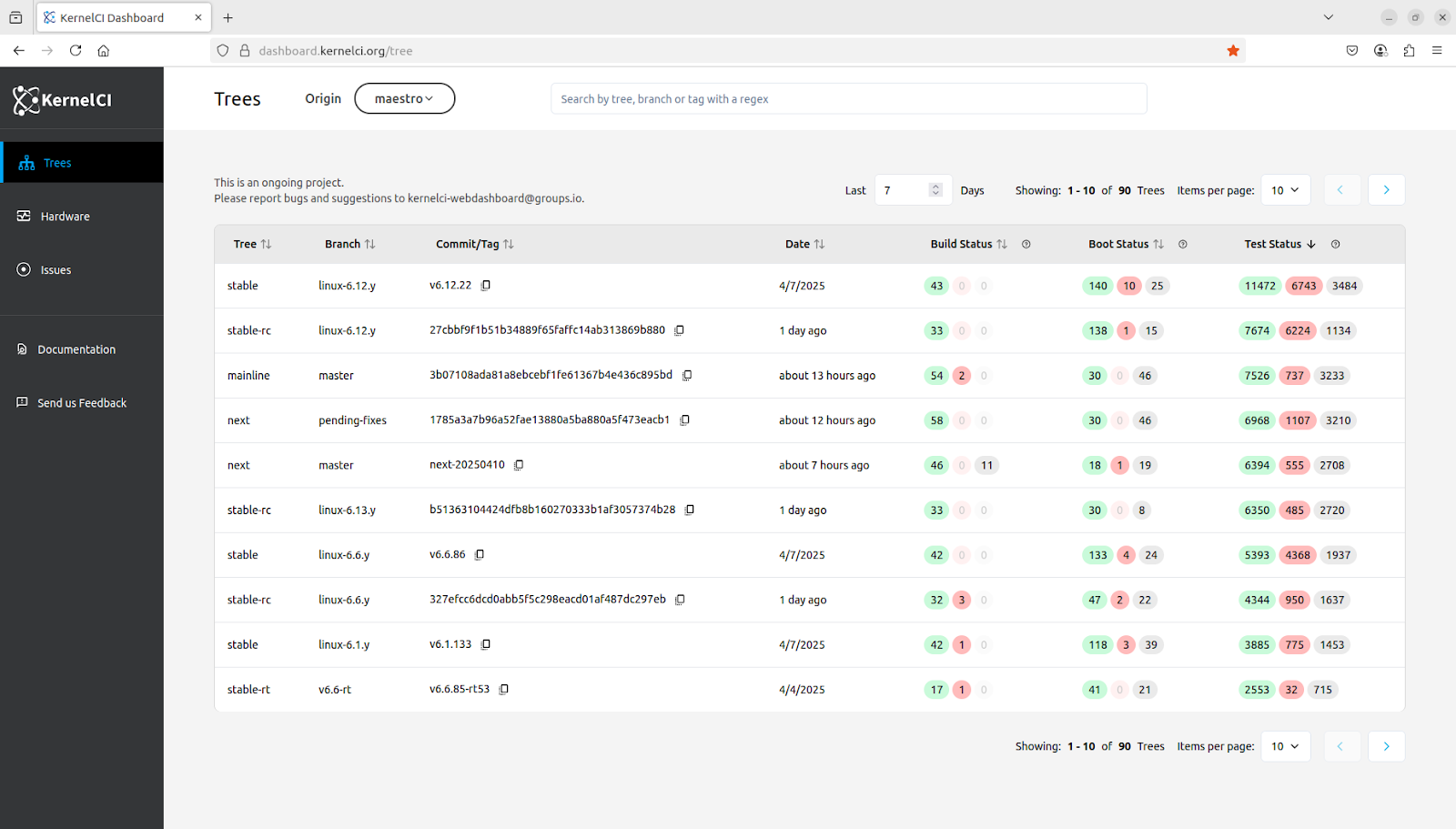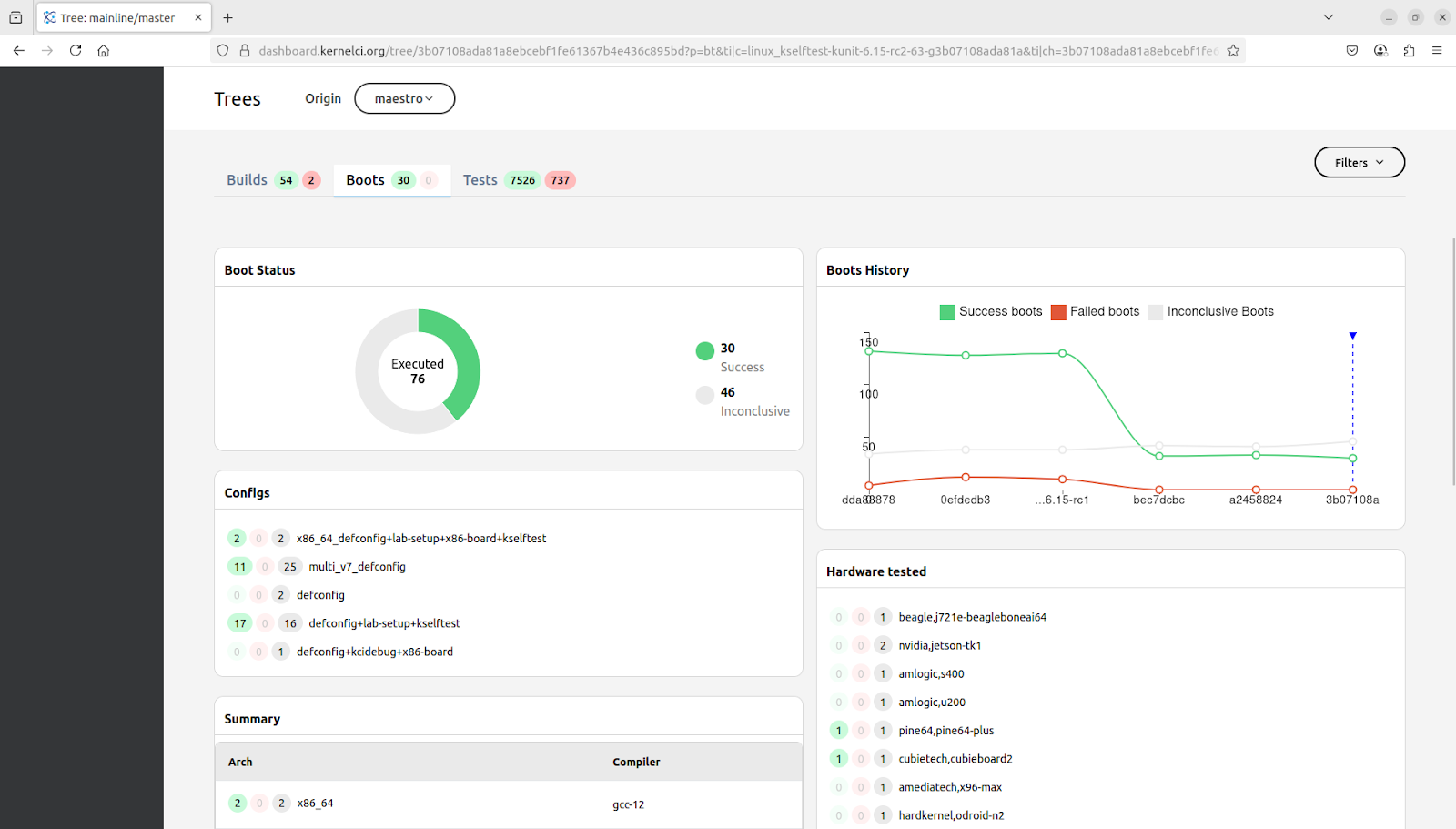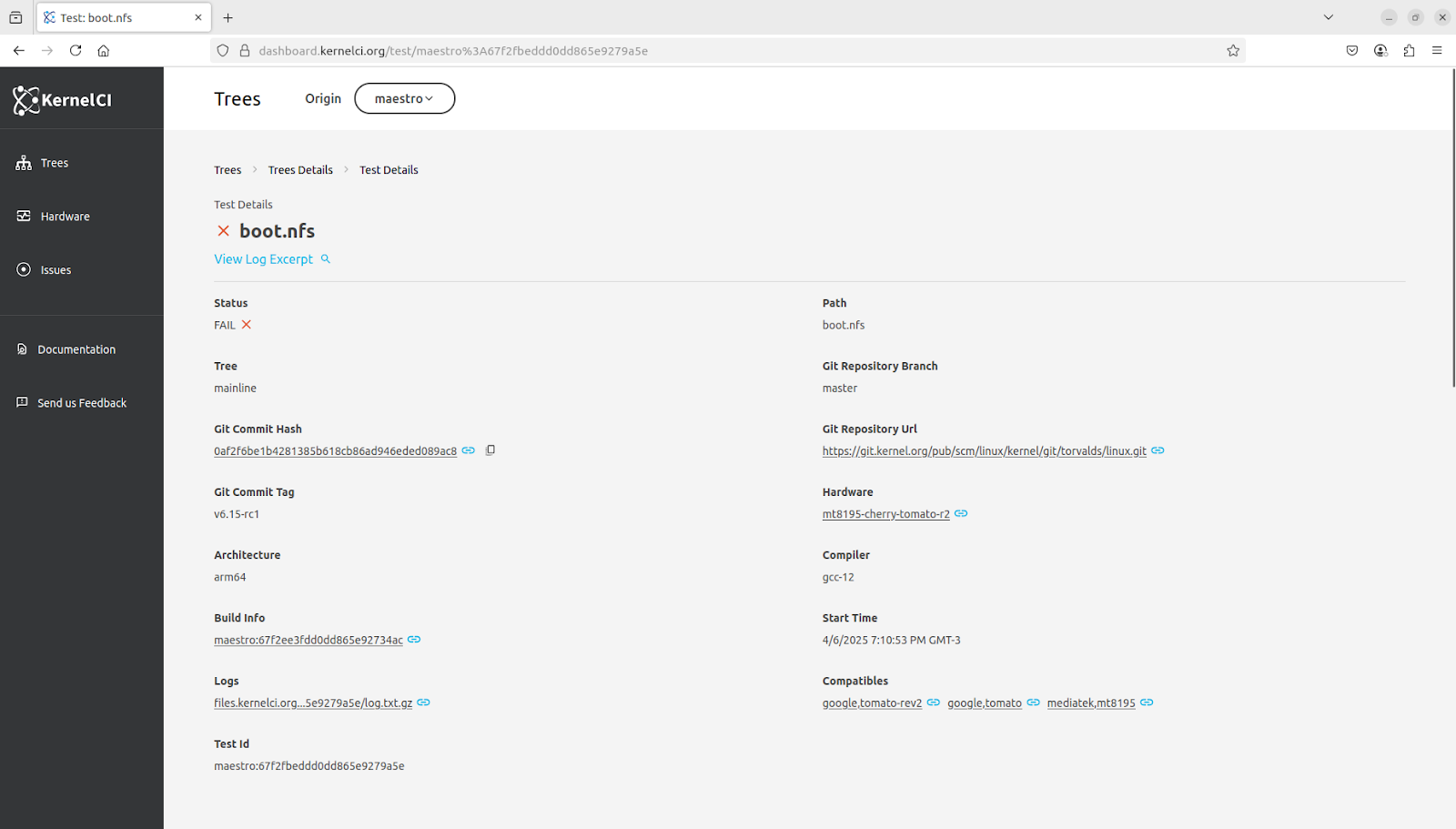

The KernelCI community had a great finish of the year. Since our last update here, we tackled some quite interesting features based on community feedback. See detailed updates in the sections below.
New KernelCI TSC
KernelCI has announced its new Technical Steering Committee (TSC) composition following the annual election process. The committee, which guides the technical direction of the project and ensures cohesion across the Linux kernel testing ecosystem, now consists of seven members: Ben Copeland (Linaro) serving as TSC Chair, Denys Fedoryshchenko (Collabora) as Infrastructure Committee Lead, and community-elected members Greg KH (Linux Foundation), Gustavo Padovan (Collabora), Mark Brown (Arm), Minas Hambardzumyan (Texas Instruments), and Yogesh Lal (Qualcomm).
This diverse group brings together expertise from major hardware vendors, infrastructure specialists, and kernel maintainers, with the current term running until October 31, 2026. The TSC meets bi-weekly in open sessions to discuss technical decisions, roadmap planning, and ensure KernelCI continues to effectively support the Linux kernel community’s testing needs.
KernelCI meeting public calendar
As you may have noticed, the KernelCI community is growing. New TSC, new working groups, more community members with newcomers arriving frequently. To facilitate access we created a public calendar to announce all our meetings to the community. Through it, it is possible to register yourself to any KernelCI community meeting. Recordings are also available for those who want to watch the meeting at a later time.
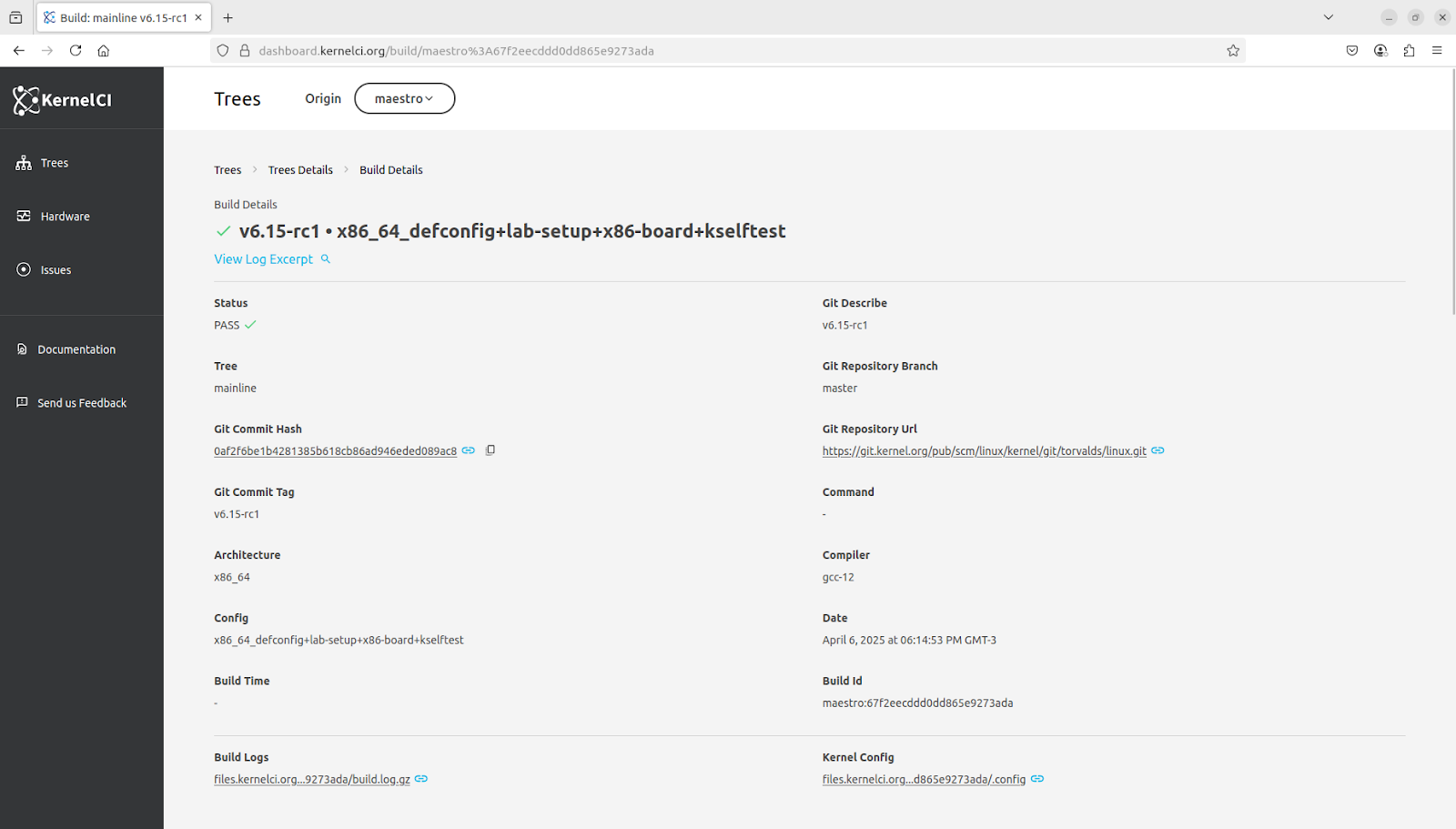
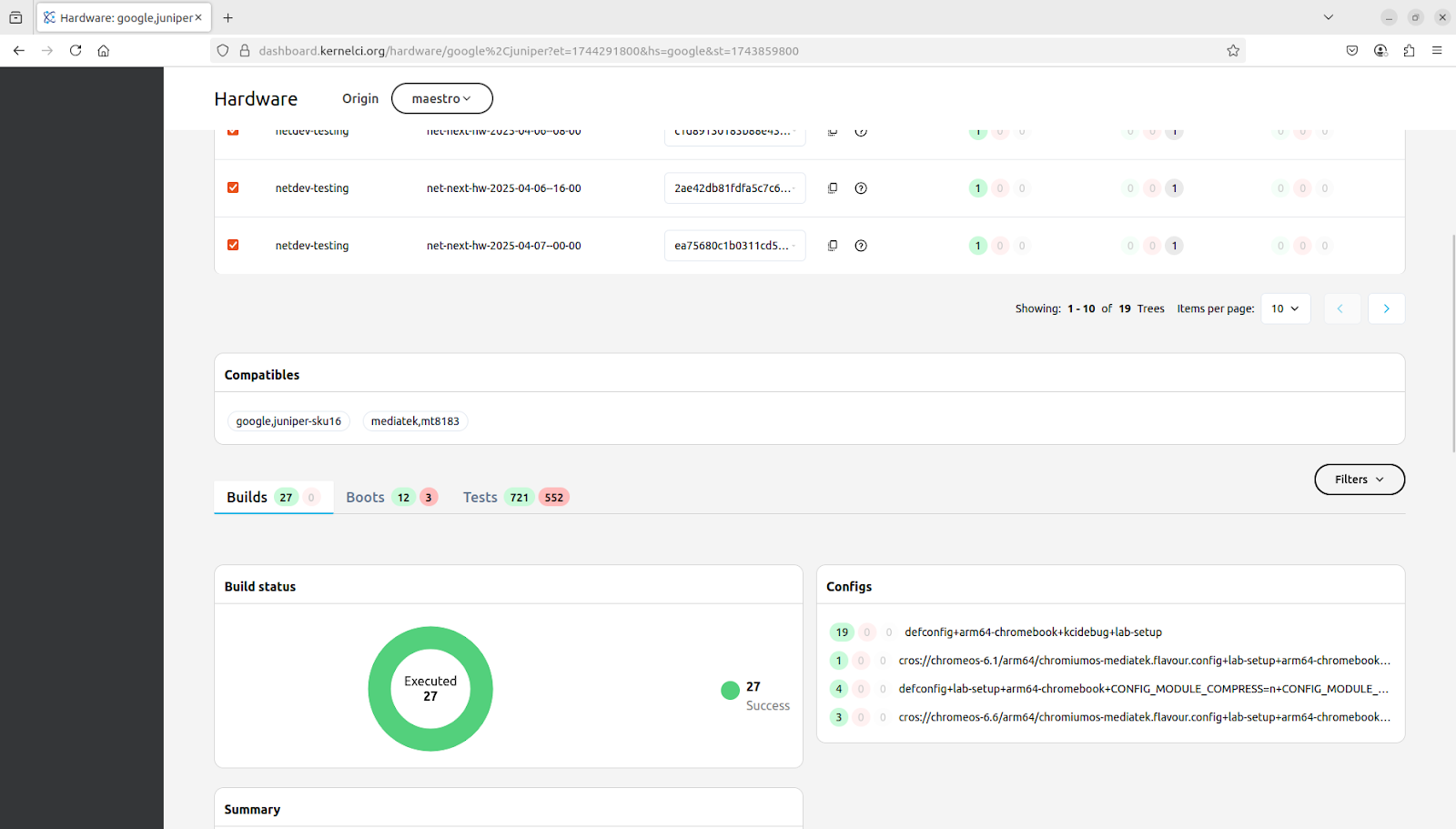
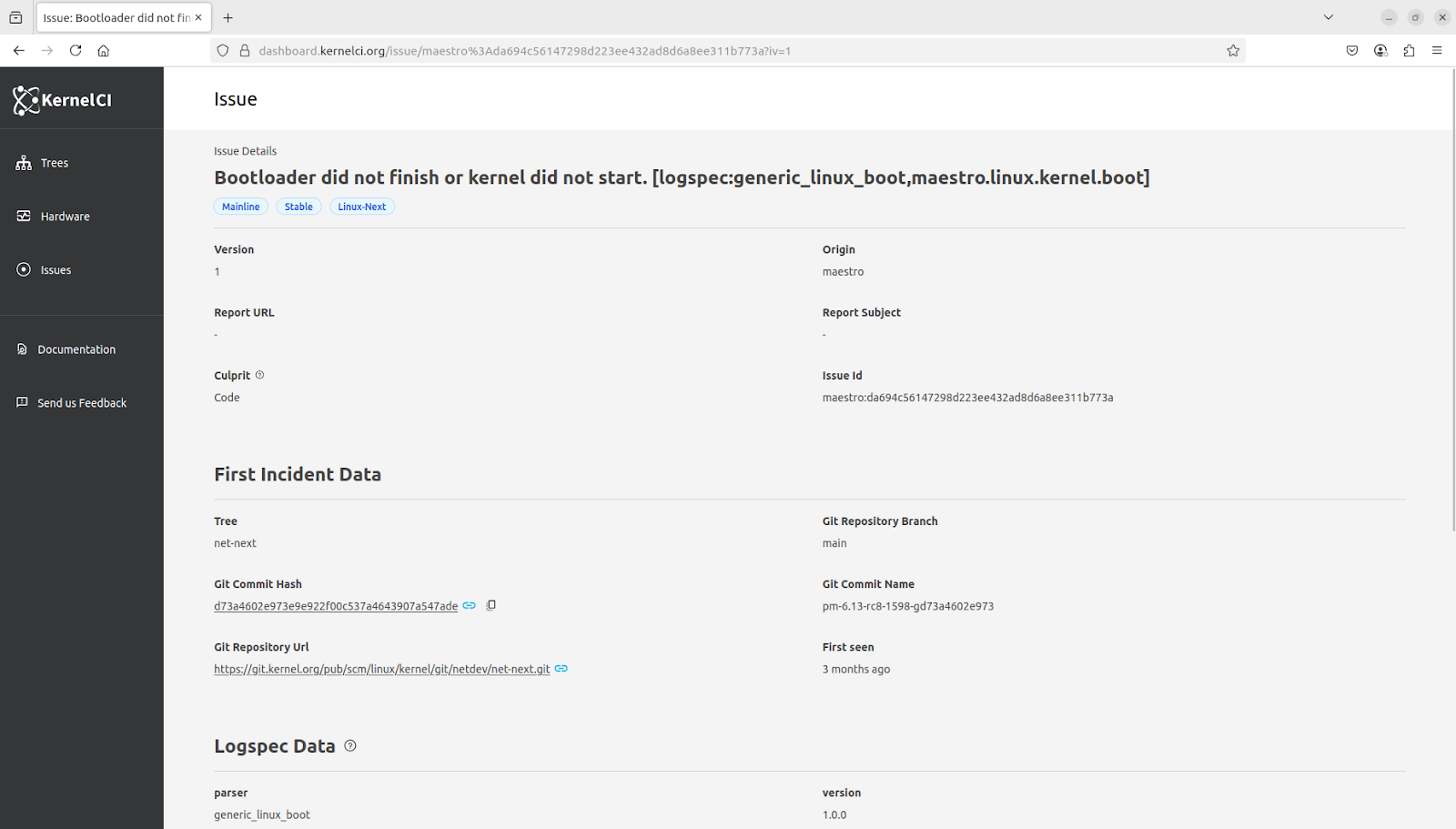
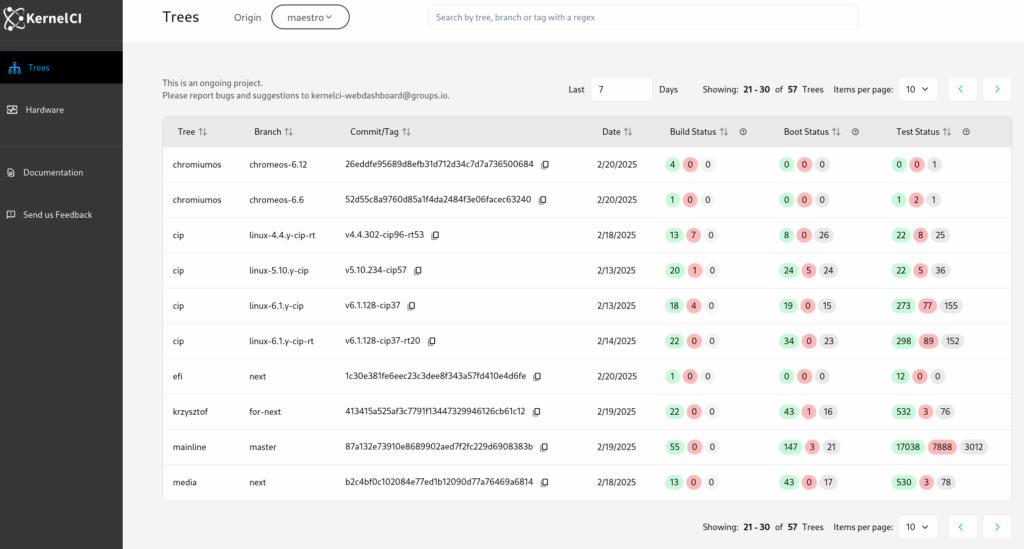
Dashboard improvements
This quarter was very focused on the health of the project.
We have introduced monitoring over the API requests and system resources. On top of that, we had a significant increase of backend test coverage, from 40% to nearly 70%, including some benchmark tests.
There is still plenty to be done, and we intend to continue refining the CI/CD of our project, further automating the delivery of future enhancements.
The main functional achievement we had was reaching the last milestone of KCIDB-ng, placing the ingestion of KCIDB submissions closer to the Django backend.
This allowed the team to detach the KCIDB schema from the dashboard database, which provides more freedom to normalize the data, making the API faster and reducing the storage footprint.
We are still meeting every two weeks in the Kernel CI Working Group to explore ideas. One experiment we ran this quarter consisted of adding a few simple filters and columns about “Labs” in some of the tables.
Pull-mode for labs
As part of the work in our Labs Working Group, the team has been working on the Maestro interface to allow labs to pull all the information they need about tests KernelCI can execute. That includes kernel builds, testing rootfs and anything else needed for organizations to run KernelCI tests on their own setup whatever lab technology they are using.
We believe that pull-mode will enable a multitude of labs that were not able to participate in KernelCI before. With pull-mode a lab can be behind a firewall, something quite common in many corporate environments. It is also lab technology agnostic as everything the lab has to do is to listen to Maestro API and then send results to our KCIDB API.
Linaro donating tuxmake, tuxrun, tuxlava
The following repositories are now live under the KernelCl GitHub namespace:
– https://github.com/kernelci/tuxmake
– https://github.com/kernelci/tuxrun
– https://github.com/kernelci/tuxlava
KernelCI is the Linux kernel’s upstream testing and continuous integration ecosystem. The project has started to use Tuxmake and TuxRun to power its build and test pipelines. Moving these tools under the KernelCI namespace brings them into an active community that will help evolve them alongside the kernel itself.
Linaro engineers will continue as co-maintainers and active contributors. All three projects retain their MIT License, so existing users and contributors will see no disruption.
Blog post announcement: https://www.linaro.org/blog/linaro-transfers-kernel-building-and-testing-tools-to-the-kernelci-project/
Core Infrastructure
- More reliable event delivery: Added an optional mode that lets clients reconnect and catch up on missed events instead of losing them.
- Better event discovery: Expanded filtering options so users can find specific events more precisely.
- Faster event queries: Added database optimizations that speed up common event lookups
- Maintenance reliability: Fixed a cleanup issue so old data can be removed as intended
- Platform/tooling updates: Upgraded the database version and refreshed development tooling to improve stability
- Build/CI automation was expanded with a new production workflow and tweaks to container image build automation.
- Tooling/container configs were refreshed to newer toolchains and base images, with many older variants removed and patches updated.
- A large legacy build configuration catalog was removed, alongside updates to runtime and rootfs configuration data.
- A new pull-based lab runtime was added, including callback parsing, log handling, and result mapping; runtime configuration was extended to support it.
- LAVA handling was hardened for retry scenarios, missing logs, and infrastructure failure reporting.
- Storage uploads gained retry logic for network and server-side failures.
- Forecast reporting was upgraded to generate an HTML report in addition to console output.
kci-dev improvements
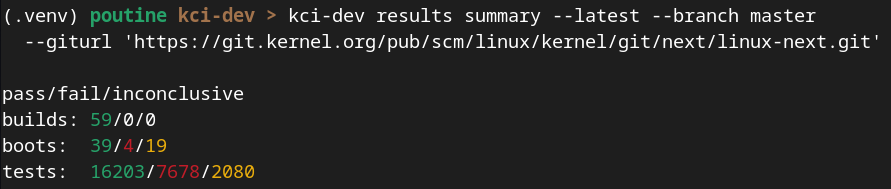
kci-dev continued evolving as a well-packaged CLI suite that Linux distributions and labs can ship, focused on helping engineers analyze KernelCI results and triage problems quickly from the terminal.
We had several improvements to the project in the past quarter:
- Released kci-dev v0.1.10, adding Arch Linux packaging support and more workflow/polish fixes, including Debian package build workflow updates and multiple fixes in issues/validation reporting and build-node filtering.
- Released kci-dev v0.1.9, with additional triage and UX refinements on top of the previously reported Q3 feature set: moved the detect workflow under results issues, added a command to fetch new issues for a checkout, and restructured the issues command group for clearer usage.
- Improved validation and reporting ergonomics: enabled list views for boots validation, added runtime fields to boot/test JSON output, and fixed boot-origin filtering and other result-selection edge cases.
- Conference and community outreach (Tokyo, Dec 2025): presented “Getting Started With New KernelCI CLI Tools” at Open Source Summit Japan 2025, and at Linux Plumbers Conference 2025 ran the Kernel Testing & Dependability MC plus gave “KernelCI kci-dev: Closing the developer feedback loop”.
Final Thoughts
We will keep working on making KernelCI easier for the community to benefit from. From greater stability to an improved Web Dashboard and a more complete kci-dev CLI, there’s much more to enhance in KernelCI for everyone. Big thank you to the entire KernelCI community for making this progress possible!Talk to us at kernelci@lists.linux.dev , #kernelci IRC channel at Libera.chat or through our Discord server!
Contributed to this blog post Arisu Tachibana, Denys Fedoryshchenko, Gustavo Padovan, Minas Hambardzumyan and Tales Aparecida.